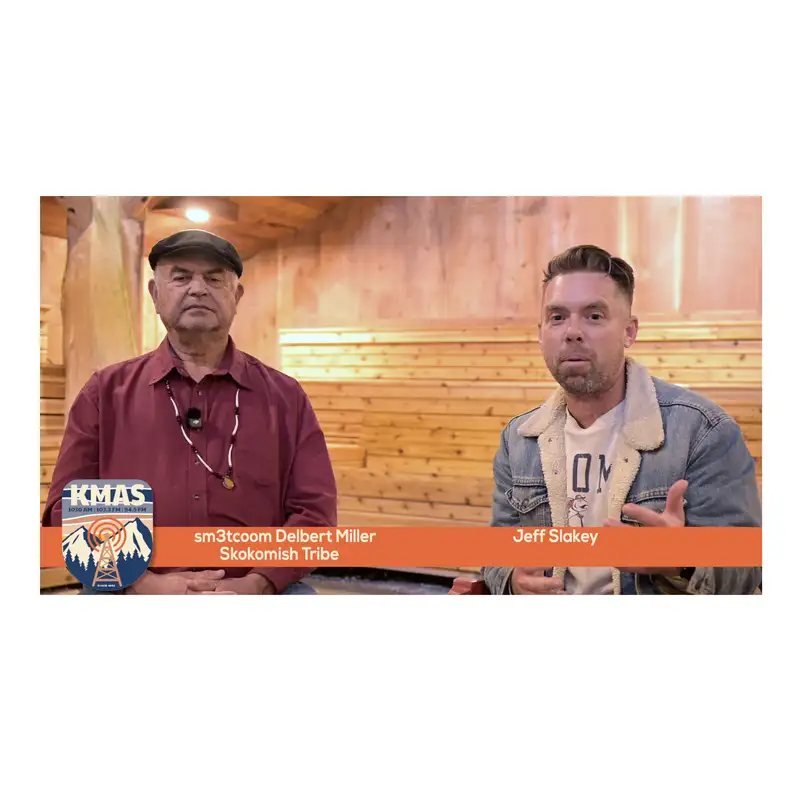
Just off Highway 106, about a mile from the Hood Canal School, stands a longhouse that sm3tcoom Delbert Miller of the Skokomish Tribe spent more than seven years of weekends building by hand. In this conversation, recorded inside the Skabob House, Miller tells KMAS’s Jeff Slakey how a great-uncle’s instruction to “face it towards the east” shaped a lifetime of preparation — and how he milled the logs on his own sawmill, hand-hewed the beams, and set yellow cedar corner posts on a scorching summer day.
The house was built for his daughter. Miller describes a series of ceremonies spanning her life, from the day she was born onward, witnessed by members of the Lummi, Tulalip, Nisqually, Nooksack and Skagit tribes and by a sitting Washington governor. Two years ago, with the house finished and a family song presented to her, she became head of the home — completing a ceremonial cycle Miller says hadn’t been carried through in 175 years. He also explains how the longhouse is used today for namings, weddings, memorials, healing and salmon ceremonies, and how the carvings on its walls came out of a family’s grief.
In the second half, Miller turns to the history many Mason County residents drive past without knowing. He shares his elders’ account of a prophecy of upheaval, of the arrival of missionaries and Indian agents around 1850, of longhouses along the water destroyed, and of the nine Twana bands — from villages at Quilcene, Dabob Bay, Seabeck, Dewatto, Tahuya, Belfair, Duckabush, Dosewallips and Hamma Hamma — being moved to Skokomish. He describes how breaking up community longhouses into single-family homes changed a way of life, how burial laws and funeral homes cost families their land, and why, through all of it, his people say: “We’re not victims.”
sm3tcoom Delbert Miller speaks at the Hood Canal Improvement Club meeting on Tuesday, November 3.
#SkokomishTribe #Skokomish #HoodCanal #MasonCounty #MasonCountyWA #SheltonWA #KMAS #FocusOnShelton #Longhouse #TwanaPeople #IndigenousHistory #NativeHistory #CoastSalish #PacificNorthwestHistory #WashingtonHistory #HoodCanalImprovementClub #TribalHistory #LocalHistory #PNW